Home › Stormwater Management Facility Hydroseeding
We provide stormwater facility hydroseeding in Dallas, TX for detention basins, infiltration areas, and drainage channels. Using deep rooted grasses and native mixes, we stabilize these critical structures to reduce erosion and support long term function and compliance.
Legendary Hydroseeding Dallas provides professional stormwater facility hydroseeding throughout Dallas, TX, Texas and the surrounding area. Our licensed, insured crew delivers safe, clean, on-time work with a free estimate before anything begins. Call 682-452-6706 or request your free quote.
Stormwater Facility Hydroseeding for Dallas Sites
Stormwater facility hydroseeding is not the same as spraying grass on a front lawn. At Legendary Hydroseeding Dallas, we design and install vegetation systems specifically for detention ponds, retention basins, bioswales, infiltration zones, and drainage channels across the Dallas area. Our focus is stabilizing soil, improving water quality, and meeting regulatory requirements while keeping long term maintenance manageable.
In Dallas, stormwater facilities see intense, short duration storms, long dry periods, and heavy clay or mixed fill soils. That combination creates erosion, channel cutting, and sediment buildup if the vegetation is not matched to the site. We select seed mixes, soil amendments, and application rates based on the facility type, side slope angles, expected flow paths, and the actual construction materials on your site, not a generic regional spec.
Whether your project is a new commercial detention pond, a municipal stormwater retrofit, or a reshaping of an existing basin after repairs, we tailor our hydroseeding approach to work with your engineering plans and local inspection requirements. Our crews are familiar with City of Dallas, Dallas County, and nearby jurisdiction standards for stabilized slopes, vegetative cover, and post construction stormwater management.
Our Step by Step Hydroseeding Process for Stormwater Facilities
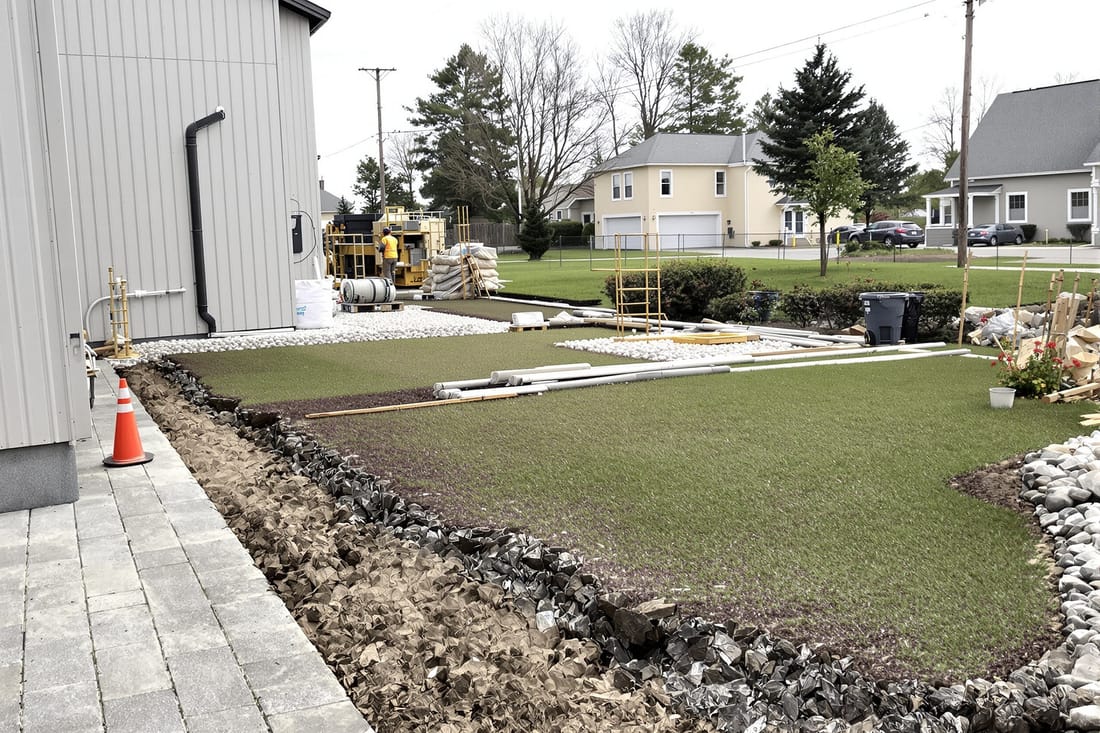
Effective stormwater facility hydroseeding starts before any material goes in the tank. First, we walk the facility with your plans in hand, confirm elevations and drainage routes, and check for compaction, ruts, or soft spots. We verify that the final grading is complete, that riprap, concrete, and structures are in place, and that the soil surface is raked or track walked enough for the mulch to key in.
Next, we evaluate soil conditions. Dallas stormwater facilities are often built with cut clay, imported fill, or spoil from other parts of the site. We check texture, compaction, and where possible, basic pH and organic matter. This guides our recommendation for soil conditioners, starter fertilizer, and whether a compost topdress is needed on critical slopes.
We then specify the seed mix and mulch system. For high flow channels and inlets, we usually combine hydroseeding with an erosion control blanket or turf reinforcement mat, with seed applied beneath and sometimes through the mat for redundancy. For side slopes that are less than about 3:1 and receive sheet flow, we may use a heavy bonded fiber matrix applied at higher rates to keep soil in place during early germination.
On application day, we batch materials by zone to match what each part of the facility needs. Our tank mix typically includes seed, mulch fibers, tackifier, fertilizer, and any approved soil amendments. We apply in a controlled pattern that starts at the bottom of slopes and works up, so we do not disturb freshly applied material. After coverage is complete, we walk the facility again to check for thin spots, verify coverage around inlets and outlets, and schedule a first irrigation or watering plan with you when feasible.
Seed Mixes and Materials That Work in Dallas Stormwater Facilities
Stormwater facility hydroseeding succeeds or fails on the plant material used. Legendary Hydroseeding Dallas uses seed mixes that are proven to survive Dallas heat, intermittent flooding, and occasional winter freezes. For most detention and retention ponds, we use a turf type blend that may include hardier tall fescues for cooler seasons and bermudagrass components for summer strength, along with selected native grasses where appropriate for water quality and habitat.
In bioswales and water quality features that must filter pollutants, we often incorporate native warm season grasses such as little bluestem or sideoats grama, and select for deeper rooting species to improve infiltration. Where local or project specific stormwater manuals call for particular species, we source those from reliable suppliers and verify test tags to ensure purity and viability.
Mulch selection is just as important as the seed. For moderate slopes and pond bottoms, a high quality wood fiber or blended fiber mulch gives good coverage and moisture retention. On steeper slopes or near inlet headwalls, we may specify a bonded fiber matrix or flexible growth medium that creates a crust-like layer on the soil surface, which resists rill erosion while seeds germinate. Tackifiers are chosen based on expected rainfall timing and whether the facility will see standing water shortly after installation.
We also plan nutrient inputs carefully. Many Dallas area fills are low in organic matter and phosphorus. A balanced, starter fertilizer included in the hydroseeding slurry provides early support, but we avoid excessive nitrogen that could leach into stormwater or encourage weak, top heavy growth that fails during storms.
What Drives Cost for Stormwater Facility Hydroseeding in Dallas
Stormwater facility hydroseeding costs are driven by factors that are specific to this type of work, not just acreage. At Legendary Hydroseeding Dallas, we build estimates around three essentials: access, complexity, and specification.
Access affects time and equipment. If our trucks can stage near the facility and shoot slopes directly, costs are lower. If we must run hose long distances, work from limited access points, or coordinate around existing landscaping or tight urban sites, labor increases. Wet bottom ponds that still hold water in the bottom may require staging from the rim only and sometimes additional safety measures.
Complexity relates to slopes, structures, and flow paths. Steep or terraced embankments, multiple inlets and outfalls, and engineered channels with varying widths require more detailed application. These areas often call for heavier mulch rates, bonded matrices, or combined hydroseed and blanket systems, all of which impact material costs.
Specification includes the seed mix composition, whether native species are required, mulch type, and any testing or documentation required by the municipality or owner. Native heavy mixes and high performance growth media are more expensive than simple turf blends and basic mulches, but they are often necessary to meet stormwater permits or long term performance targets.
We provide line item estimates so you can see how design choices influence cost. If you are still in design, we can suggest adjustments such as slope breaks, blanket zones, and seed mix options that reduce installation and maintenance cost while still meeting your hydraulic and regulatory goals.
Common Problems in Dallas Stormwater Facilities and How We Prevent Them
Stormwater facilities around Dallas commonly suffer from three vegetation related issues: slope erosion, patchy cover, and overgrown, unmaintainable vegetation. Hydroseeding alone will not fix these if it is not planned correctly. Legendary Hydroseeding Dallas addresses these issues at the design and installation stages.
Slope erosion usually shows up as rills or gullies on the steepest faces or near concentrated flow points. We prevent this by aligning the mulch system with the expected hydraulic stress. For example, we rarely rely on basic mulch alone on slopes steeper than about 3:1 or directly below outfalls. Instead, we combine hydroseed with blankets or reinforced matrices and we match overlap patterns to flow direction so water does not lift the edges.
Patchy cover is often caused by poor seed to soil contact, uneven mulch distribution, or seeds that cannot tolerate the local conditions. We minimize these risks by requiring properly prepared soil surfaces, calibrating our equipment for each job, and using mixes specific to the Dallas climate and your facility type. After installation, we provide a short establishment and watering guide that details what the owner or contractor should do in the critical first 4 to 8 weeks.
Overgrown vegetation can create inspection failures and maintenance headaches. In sensitive water quality basins we select species that achieve the required cover and root depth without forming impenetrable thickets along the entire perimeter. We can also define separate vegetation zones, for example, a lower basin area with more vigorous natives, and upper side slopes with a more easily mowed turf blend, so your maintenance crews can keep an access band clear for inspection and sediment removal.
Regulatory and Inspection Considerations for Dallas Stormwater Hydroseeding
Stormwater facility hydroseeding in the Dallas region often ties into post construction stormwater permits, subdivision development requirements, or private site drainage plans. Our team is used to working within those frameworks, which helps avoid failed inspections and rework.
Before we bid, we review any provided stormwater pollution prevention plan and landscaping or stormwater facility details. If the plans reference standards such as City of Dallas design manuals or North Central Texas Council of Governments guidance, we align our seed mixes, coverage rates, and stabilization methods to comply or we propose clearly documented alternates for engineer approval.
We understand that inspectors typically look for stabilized slopes, adequate vegetative cover within a specified time frame, and functional access to inlets and outlets. To support this, we can provide documentation of seed blends, application dates, and product data sheets for mulches and tackifiers. For larger projects or public work, we can coordinate with the project engineer or inspector on pre installation meetings and punch list walks.
If your project is under a construction general permit, timely stabilization is critical once final grades are reached. We can schedule hydroseeding to meet those deadlines and can phase work so that completed sections of the facility reach stabilization while other parts of the site remain under construction.
Why Work With Legendary Hydroseeding Dallas for Stormwater Facilities
Stormwater facility hydroseeding is a specialized service. Legendary Hydroseeding Dallas focuses on the combination of hydraulics, vegetation, and local soil behavior that these systems require. We are not guessing when we recommend a mulch rate or seed mix. Our crews spend much of their work year on detention ponds, drainage channels, and water quality features throughout the Dallas area.
Local experience matters. We have seen how the heavy spring and fall storms cut into unprotected slopes, how summer heat can wipe out shallow rooted species, and how poorly stabilized ponds quickly fill with sediment. That history informs our material selections and our insistence on decent soil prep and realistic maintenance plans.
We work comfortably with civil engineers, general contractors, municipalities, and private owners. Our goal is to hand over a stormwater facility that stabilizes quickly, passes inspections, and remains maintainable over the long term. If you are planning, building, or rehabilitating a stormwater facility in Dallas or nearby communities, we can review your designs early, recommend practical vegetation strategies, and then install the hydroseeding system that brings those plans to life.